
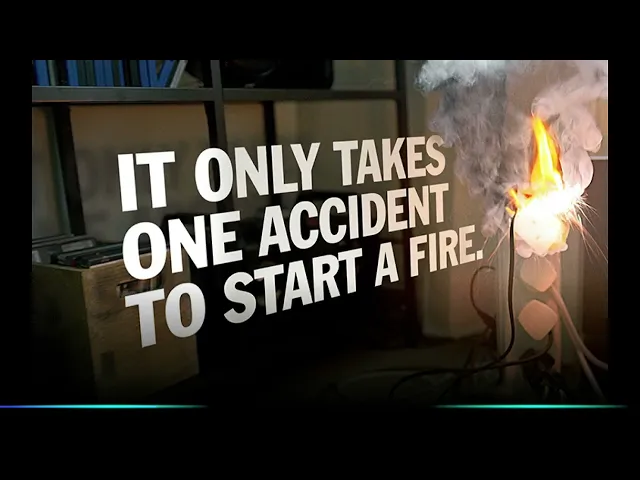
HOME OFFICE FIRE KILLS VOICE CAMPAIGN
The UK Home Office partnered with us to create an innovative voice advertising approach for their Fire Kills public safety campaign. As Head of Product, I led the development of this agentic advertising experience that went beyond traditional awareness messaging to drive sustained behavior change around fire safety.
Head of Product | Producer
MGOMD
UK Home Office
Fire Kills
Alexa
Challenge
We partnered with MGOMD and the UK Government on their Fire Kills campaign to encourage smoke alarm testing through voice-enabled advertising across Amazon and DAX inventory.
Traditional fire safety campaigns achieve awareness but rarely drive sustained action. The challenge was moving beyond passive messaging to create an experience that would establish ongoing fire safety routines that persisted long after the campaign ended.
Results
Successfully demonstrated how agentic advertising can drive sustained behaviour change for public safety campaigns, achieving a 50.6% goal conversion rate against a 15-20% industry benchmark - outperforming standard voice advertising by more than 2.5x. The experience moved beyond traditional awareness metrics to track actual safety actions taken by households.
The campaign showed that voice technology can serve as an ongoing safety partner rather than a one-time information source, with 82% of completions being monthly reminder sets rather than link requests. This created repeated touchpoints that reinforce positive behaviours over time, with households now having automated monthly smoke alarm testing reminders for 12 months.
Proved that government public safety campaigns can leverage emerging technology platforms to achieve measurable behaviour change outcomes rather than just message recall. The campaign pioneered "Agentic Advertising" - where Alexa continues delivering the desired outcome long after the campaign flight ends, creating sustained public safety impact without continued media spend.
9M
9+ million impressions delivered
50.6%
Goal conversion rate (benchmark: 15-20%)
82%
Total completions were monthly reminder sets (vs link requests)
Process
Agentic Advertising Strategy: I designed a voice experience that functioned as an agent for behavior change rather than passive messaging. The skill didn't just inform users about fire safety - it actively guided them through safety checks, set reminders, and helped establish ongoing routines.
Interactive Experience Design: I created a conversational flow that walked users through key fire safety actions: testing smoke alarms, planning escape routes, and identifying fire hazards in their homes. The experience provided step-by-step guidance rather than generic advice.
Behavioural Triggers: Working with the Home Office team, I integrated reminder functionality that prompted users to return for monthly alarm tests and seasonal safety checks, creating sustained engagement rather than one-time interactions.
Government Standards Compliance: Throughout development, I worked closely with the Home Office to ensure all safety information met government standards and aligned with official Fire Kills campaign messaging.
Analytics & Optimisation: Dashboards to monitor user engagement patterns, completion rates for safety checks, and reminder response rates. Analysing campaign data week by week allowed me to identify which action (link or reminder) drove the highest action rates and optimise the experience flow. I worked with the media team to shift ad spend toward time / days that converted awareness into actual safety behaviours, maximising the campaign's public safety impact.














Conclusion
The Home Office Fire Kills campaign pioneered a new approach to public safety advertising through voice technology. By designing an experience that actively guided users through safety behaviours and established ongoing routines, we demonstrated how agentic advertising can deliver outcomes that traditional campaigns cannot.
The project showed that voice platforms are uniquely suited to behaviour change campaigns, providing the repeated prompting and guided action that drives long-term habit formation. This approach created a scalable model for how government agencies can use voice technology to achieve genuine public safety outcomes.